Three months is better than four. I just couldn't let tonight's results stand without regurgitating a combination of everyone else's opinions that I will call my own.
Officiating in sports will always be a hotbed issue. I can't keep track of how many times I've erred at my job, and that's without thousands of people watching in person, and millions more dissecting my every decision during and after the fact. On the other hand, if I could review all of my customer interactions on video I'd probably be a lot better at my job. And if my job actually mattered, they might force me to "watch the tape." But let's talk about the sucky job that you do care about.
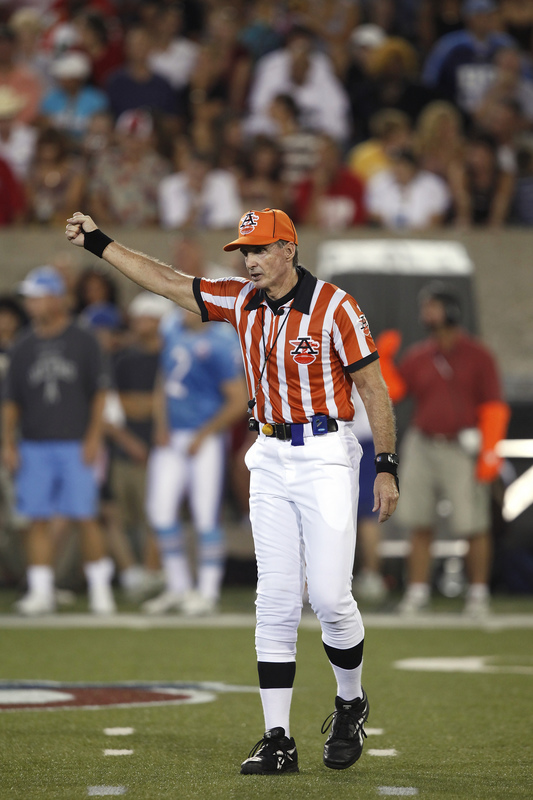
It's been said many times that the best refs go unnoticed. That's where umpires differ. Whether ump makes a good call or not, you will notice him because he makes a call on every play. Football refs will do all kinds of things between and during plays, but unless they throw a flag or get in the way or dressed like an ice cold creamsicle you won't take note. They blow a whistle, but they don't make a noticeable decision on most plays. Every pitch, every batted ball, every wind-up can't be completed legally without the umpires' approval.
Which is probably why umpires do what they do. They not only get paid to interact with the game they (presumably) love, they get paid to control the game they (presumably) love. And they really do control the game. Their rule is final. In what other sport can a player be ejected for arguing with an official, without warning?
It's natural to resent their power. They may have to answer to some league official at some point, but during the game there is nothing anyone else can do to stop an umpire making a mistake, and refusing to believe they made a mistake. Implementing instant replay two seasons ago was a big deal, because it was the first time an ump could be wrong, and be told he was wrong, and have his wrongness corrected. But what's more important: the distinction between a home run and not a home run or the distinction between an out and not an out? The answer lies in another question: which came first, the out or the home run?
Consider the American League Central. Umpire mistakes robbed both of the primary contenders tonight.
By now most have heard about Jim Joyce's mugging of Armando Galarraga and the Detroit Tigers. Best described by the man himself: "I just cost that kid a perfect game." Joyce said this after viewing the instant replay of his terrible call.
The small consolation of Detroit's stolen perfect game: they still won. Jim Joyce denied us history, but he did not deny victory. The Tigers would rather have the latter right now.
The big consolation: Dale Scott's compensatory robbery of the Twins' chance at victory. No national outlet mentions it, but instant replay clearly shows that Josh Wilson was just as out as Jason Donald.
Galarraga loses his place in history, but Detroit gains a game in the standings. Next to each other, in that sentence, makes it sound pretty lopsided. Come September, however, we'll see whose prize was more valuable.
Wednesday, June 2, 2010

Sunday, March 21, 2010
Hibernation
In what may be a recurring pattern, I stopped writing for four months. Besides sleeping with grizzly bears, I've been reading about sports and following sports, agonizing over how many mistakes the Wolves will make and continue to make, and how consistently inconsistent the Wild remain.
There is some good news though: The Twins have been killing it. And killing it. And really, really KILLING IT. The Twins' payroll this year is pushing $100 million, and with the insurance money from Joe Nathan's UCL, the Twins could sign a possible replacement.
Wait, I didn't mention Joe Nathan's impending surgery? Or the Twins complete lack of any other reliable strike-out relievers? Oh. Well I guess you probably know this, but throwing a baseball 93 miles an hour does not strengthen a human arm. It really is too bad that there's so much money in it, because throwing a baseball does not do a body good. Joe Nathan will know this soon enough, because regaining his previous strength and range of motion takes almost a year of painstaking physical therapy. Some twelve million dollars in guaranteed salary will ease pain. Didn't I say we should trade him?
Not that a closer would net a team much. They're important, but only to contenders. They're probably the most important role-player on a baseball team, but should role-players take up more than 10% of a team's payroll? There's bound to be some teams who would trade for an elite closer, and be dumb enough to give up at least one prospect with star-potential. That's too much to give up for a luxury.
That's what Joe Nathan was/is: a luxury. Baseball games have lasted nine innings for a hundred years without much trouble. The Twins have played without the ninth inning for awhile, but they can still win playing it old school. Which they will have to do, because a good replacement isn't going to fall into their lap. Teams will be asking for half the farm, because the Twins will not have enough options to get a favorable price.
So who will end up closing? Don't be surprised if it's Nick Punto.
So I guess that turned out a bit more negative than such great news merits. The Twins are going into this season with a new stadium and a new infield. They're going to be good, even if Nick Punto really does pitch in the ninth. At least his defense would be solid.
There is some good news though: The Twins have been killing it. And killing it. And really, really KILLING IT. The Twins' payroll this year is pushing $100 million, and with the insurance money from Joe Nathan's UCL, the Twins could sign a possible replacement.
Wait, I didn't mention Joe Nathan's impending surgery? Or the Twins complete lack of any other reliable strike-out relievers? Oh. Well I guess you probably know this, but throwing a baseball 93 miles an hour does not strengthen a human arm. It really is too bad that there's so much money in it, because throwing a baseball does not do a body good. Joe Nathan will know this soon enough, because regaining his previous strength and range of motion takes almost a year of painstaking physical therapy. Some twelve million dollars in guaranteed salary will ease pain. Didn't I say we should trade him?
Not that a closer would net a team much. They're important, but only to contenders. They're probably the most important role-player on a baseball team, but should role-players take up more than 10% of a team's payroll? There's bound to be some teams who would trade for an elite closer, and be dumb enough to give up at least one prospect with star-potential. That's too much to give up for a luxury.
That's what Joe Nathan was/is: a luxury. Baseball games have lasted nine innings for a hundred years without much trouble. The Twins have played without the ninth inning for awhile, but they can still win playing it old school. Which they will have to do, because a good replacement isn't going to fall into their lap. Teams will be asking for half the farm, because the Twins will not have enough options to get a favorable price.
So who will end up closing? Don't be surprised if it's Nick Punto.
So I guess that turned out a bit more negative than such great news merits. The Twins are going into this season with a new stadium and a new infield. They're going to be good, even if Nick Punto really does pitch in the ninth. At least his defense would be solid.
Tuesday, November 24, 2009
Inside the Box: Wolves 87 Clippers 91
Watchable Wolves games will not be televised. The Wolves won't win them either, because at this point they're bound to be pretty comfortable with losing.
Jonny Flynn had his best game of the season, with his first 2+ assist:turnover ratio. It had been a tough stretch for the young guard, when he stopped performing his greatest strength: scoring. Defenses were definitely keying in on his dribble-drives because he would look nowhere but the cup. He not only found his scoring touch again, he dished out five assists. You never know with assists, as official scorers tend to give them out for things as dumb as feeding Al in the low post.
Speaking of Al, he sucked in this game. Eight turnovers, six traveling violations, three in the fourth quarter. The Wolves had closed the score to 87-89 with under thirty seconds to go, and got the stop they needed. So needing just a deuce to tie the game, they fed Al in the post. Then Al took a different kind of deuce, traveling yet again to kill whatever momentum the Wolves gained from Ryan Gomes' huge three (which would be the Wolves' last of the night). Nice one, Al.
Hopefully there will be other opportunities to win a close game. Hopefully Big Al won't choke again, but nobody has ever called him or any of the other Wolves winners.
Jonny Flynn had his best game of the season, with his first 2+ assist:turnover ratio. It had been a tough stretch for the young guard, when he stopped performing his greatest strength: scoring. Defenses were definitely keying in on his dribble-drives because he would look nowhere but the cup. He not only found his scoring touch again, he dished out five assists. You never know with assists, as official scorers tend to give them out for things as dumb as feeding Al in the low post.
Speaking of Al, he sucked in this game. Eight turnovers, six traveling violations, three in the fourth quarter. The Wolves had closed the score to 87-89 with under thirty seconds to go, and got the stop they needed. So needing just a deuce to tie the game, they fed Al in the post. Then Al took a different kind of deuce, traveling yet again to kill whatever momentum the Wolves gained from Ryan Gomes' huge three (which would be the Wolves' last of the night). Nice one, Al.
Hopefully there will be other opportunities to win a close game. Hopefully Big Al won't choke again, but nobody has ever called him or any of the other Wolves winners.
Monday, November 23, 2009
The Cowboy delivers
No not the Cowboys. Owen Nolan, the toughest son of a female dog around, took his 37-year-old body to the ice at the X, and nearly left without it. Throughout the game he threw the living corpse of his nineteen year NHL career at the puck, at the Islanders, and at the net. Remember his last target, because the Wild would need him to hit it to avoid overtime.
The entire team played an energetic and fast-paced first period. The New Yorkers couldn't hang on to the puck in any zone, and couldn't deal with the Wild's very improved puck-possession game. More time spent with their line-mates always improves the players sense of timing and positioning, but it's been the break-out of their defensive zone that's allowed the Wild to keep the puck after they've forced a turnover. What's helped has been an extra pass within the defensive zone in order to shake the opposing forecheck. Call it what you will, but playing with patience in their own zone has allowed a much faster and cleaner transition through the neutral zone. That's a good thing. Once they reach the opposing zone, they tend to lose their way, but getting there is half the battle.
Getting the first goal usually wins the game for the Wild, but for all the energy with which they opened the game, they were no properly awarded. Owen Nolan eschewed his body for the puck, hitting the net with a fluky bounce off the goaltender's skate as he fell into the boards. This was after taking numerous shots to the face, none of which were called by the referees. The Islanders got that benefit, but the Wild continued their strong power-play kill. New York went 0 for 6 on the night. The Isle got the equalizer not long into the second period, but were gracious enough to take back-to-back penalties, giving the Wild the dreaded 5-on-3 power play for more than a minute. Dreaded for all of the wrong reasons given the way the Wild have played with extra men in the past few games. Predictably, the Wild collapsed the New York defense, but really only got one good shot before the power-play died, buried side-by-side with the Wild's momentum. The Islanders took it to the Wild, the Wild did not score on their other two power-plays (0/4 in the period), and Josh Bailey took the lead after Backstrom got turned around on the Islanders' puck movement. More often than not this season, game over.
Yet the Wild tied it on Mikko Koivu's, get this, power-play goal in the third period. The play was beautifully skated, beautifully passed, and beautifully finished with a one-time deflection. No standing around, passing back and forth between the points, which inevitably leads to a shot from one of those points. Not the way to score, on a power-play or otherwise. The way to score is to pass the puck from the goal-line, through the crease, and then back across the slot to Koivu's waiting blade. Misdirection that the goaltender cannot handle is the way to create scoring chances. Hopefully they can learn from that power-play.
They'll watch the tape from the end of the third as well. The Cowboy went to the net on Nick Schultz shot, and took a shot of his own from the Islander defense. Erik Belanger hustled to keep the puck in the zone, shooting it high as Nolan picked himself up from the ice in time to catch Belanger's shot, drop it to his stick, and shove in the winner. After the checks around the net, the sticks to his face, and his diving blocked shot (off of his laces no less), the game-winning catch-and-shoot seemed pretty easy. For a fiery Irishman like Owen Nolan, it probably was.
The entire team played an energetic and fast-paced first period. The New Yorkers couldn't hang on to the puck in any zone, and couldn't deal with the Wild's very improved puck-possession game. More time spent with their line-mates always improves the players sense of timing and positioning, but it's been the break-out of their defensive zone that's allowed the Wild to keep the puck after they've forced a turnover. What's helped has been an extra pass within the defensive zone in order to shake the opposing forecheck. Call it what you will, but playing with patience in their own zone has allowed a much faster and cleaner transition through the neutral zone. That's a good thing. Once they reach the opposing zone, they tend to lose their way, but getting there is half the battle.
Getting the first goal usually wins the game for the Wild, but for all the energy with which they opened the game, they were no properly awarded. Owen Nolan eschewed his body for the puck, hitting the net with a fluky bounce off the goaltender's skate as he fell into the boards. This was after taking numerous shots to the face, none of which were called by the referees. The Islanders got that benefit, but the Wild continued their strong power-play kill. New York went 0 for 6 on the night. The Isle got the equalizer not long into the second period, but were gracious enough to take back-to-back penalties, giving the Wild the dreaded 5-on-3 power play for more than a minute. Dreaded for all of the wrong reasons given the way the Wild have played with extra men in the past few games. Predictably, the Wild collapsed the New York defense, but really only got one good shot before the power-play died, buried side-by-side with the Wild's momentum. The Islanders took it to the Wild, the Wild did not score on their other two power-plays (0/4 in the period), and Josh Bailey took the lead after Backstrom got turned around on the Islanders' puck movement. More often than not this season, game over.
Yet the Wild tied it on Mikko Koivu's, get this, power-play goal in the third period. The play was beautifully skated, beautifully passed, and beautifully finished with a one-time deflection. No standing around, passing back and forth between the points, which inevitably leads to a shot from one of those points. Not the way to score, on a power-play or otherwise. The way to score is to pass the puck from the goal-line, through the crease, and then back across the slot to Koivu's waiting blade. Misdirection that the goaltender cannot handle is the way to create scoring chances. Hopefully they can learn from that power-play.
They'll watch the tape from the end of the third as well. The Cowboy went to the net on Nick Schultz shot, and took a shot of his own from the Islander defense. Erik Belanger hustled to keep the puck in the zone, shooting it high as Nolan picked himself up from the ice in time to catch Belanger's shot, drop it to his stick, and shove in the winner. After the checks around the net, the sticks to his face, and his diving blocked shot (off of his laces no less), the game-winning catch-and-shoot seemed pretty easy. For a fiery Irishman like Owen Nolan, it probably was.
Lukewarm water: Coyotes 3 Wild 2
The Wild hit the ice skating, and promptly took a penalty. They killed it without much trouble, but did not seem to realize it. They remained on their heels for the rest of the first period, though it remained scoreless throughout. It was actually a mistake they didn't make that cost them. Owen Nolan's phantom slash (a light tap on the knee as Sami Lepasto's stick snapped in two from a relatively weak pass) gave Phoenix the power-play needed to open the scoring.
The Wild's top line tried their best to keep the Wild in the game, but a complete lack of secondary scoring from Marty Havenot and his linemates ultimately doomed the Wild. Andrew Brunette, Antti Miettenen, and Mikko Koivu? A combined +6. Every other Wild forward? A combined -6. Not winning numbers.
As far as winning plays go, surrendering another goal nineteen seconds after tying the game is quite the opposite. No movement from the defense as Backstrom allowed his only rebound of the night, after which Scottie Upshall's gliding shot slipped under Nik's pad from a sharp angle. Inexplicable and inexcusable, from both Backs and the defense. We all hoped that these kinds of lapses disappeared. We were wrong. This team is still growing within the little talent they have.
The Wild's top line tried their best to keep the Wild in the game, but a complete lack of secondary scoring from Marty Havenot and his linemates ultimately doomed the Wild. Andrew Brunette, Antti Miettenen, and Mikko Koivu? A combined +6. Every other Wild forward? A combined -6. Not winning numbers.
As far as winning plays go, surrendering another goal nineteen seconds after tying the game is quite the opposite. No movement from the defense as Backstrom allowed his only rebound of the night, after which Scottie Upshall's gliding shot slipped under Nik's pad from a sharp angle. Inexplicable and inexcusable, from both Backs and the defense. We all hoped that these kinds of lapses disappeared. We were wrong. This team is still growing within the little talent they have.
Sunday, November 22, 2009
Inside the Box: Timberwolves @ Trail Blazers
The Wolves played a basketball game and lost, because they suck, and will continue to suck for fore and unforeseeable future. They suck enough to lose their only national TV game (or any TV broadcast that night for that matter). They've lost just about everything but their bladder-control, but will probably lose that by the time the season's over. If they're even on TV when it finally happens, watching every miserable moment of basketball will be worth it.
A little too easy
So after two weeks off, the Vikings are finally back to playing NFL football. It's good to have them back, too, because Sunday just isn't the same without the boys in purple. Though it remains to be seen whether any remaining opponent will put up any fight. I don't feel like the Vikings have really been tested, except for their only loss of the season.
There's plenty to like about the details. Except for some big plays, the defense shut down the Seahawks, both through the air and the ground. Not a lot of sacks, but except for the mentioned plays, most of the completions were short, underneath, and harmless. Those big plays came during garbage time, but they ruined several things for the Vikes:
1. The shutout, which they haven't had all season.
2. Every improvement that their pass defense seemed to show against the Steelers
3. Their season-long redzone rushing shutout. To a guy weighing less than 200.
All of these, against an awful Seahawk O-line, pretty much spells out what's been true all season: the Vikings defense is not dominant. They'll show flashes of dominant play, but when the sacks aren't coming, receivers are going to get open. Wide open. For big gains. Tyrell Johnson and Madieu Williams don't do anything from their safety positions. Karl Paymah couldn't cover a guy in a wheelchair, and Cedric Griffin seems invisible. Have you heard of or seen Griffin making a play in the past month? Me neither. I'll give him a pass (ha), since teams haven't thrown one his way since Antoine Winfield went down. I don't think Winfield being out is the main problem though.
Even Darren Sharper, he of 7 interceptions this season, never made a large amount of plays for the Vikings under Leslie Frazier. Not that I completely blame Frazier's scheme or believe Sharper's derogatory comments towards it. It's a combination of poor play and a passive two-deep scheme. Ed Reed isn't the best safety in the league because he sits back in prevent mode. He takes risks, and thrives by being allowed to do so. The Vikings safeties don't take risks, whether it's their decision or Leslie Frazier's. Either way, the corners can't do it by themselves, because they just aren't that good. Asher Allen in the starting line-up would definitely be an upgrade though. The kid can play, let him.
The special teams didn't generate any touchdowns, but didn't allow any and forced a fumble. The offense shook off the rust from their bye weeks and started to cruise in the second quarter through some good short-passing before the Seahawks' weariness opened up the route-tree. The Vikings have three legitimate weapons for Favre to use, and that excludes Adrian Peterson. If defenses take away one or two, like they did to Sidney Rice and Peterson in the first quarter, then Percy Harvin, Visanthe Shiancoe, and even Bernard Berrian can make them pay.
Of course, it all depends on Favre, who has played nothing short of spectacularly. That's what I'm still getting used to: the dependency of my team's success on an elite quarterback, and the knowledge that a one-two year rental will get credit for every win. It won't be our championship, it will be Favre's, because he'll have earned it.
There's plenty to like about the details. Except for some big plays, the defense shut down the Seahawks, both through the air and the ground. Not a lot of sacks, but except for the mentioned plays, most of the completions were short, underneath, and harmless. Those big plays came during garbage time, but they ruined several things for the Vikes:
1. The shutout, which they haven't had all season.
2. Every improvement that their pass defense seemed to show against the Steelers
3. Their season-long redzone rushing shutout. To a guy weighing less than 200.
All of these, against an awful Seahawk O-line, pretty much spells out what's been true all season: the Vikings defense is not dominant. They'll show flashes of dominant play, but when the sacks aren't coming, receivers are going to get open. Wide open. For big gains. Tyrell Johnson and Madieu Williams don't do anything from their safety positions. Karl Paymah couldn't cover a guy in a wheelchair, and Cedric Griffin seems invisible. Have you heard of or seen Griffin making a play in the past month? Me neither. I'll give him a pass (ha), since teams haven't thrown one his way since Antoine Winfield went down. I don't think Winfield being out is the main problem though.
Even Darren Sharper, he of 7 interceptions this season, never made a large amount of plays for the Vikings under Leslie Frazier. Not that I completely blame Frazier's scheme or believe Sharper's derogatory comments towards it. It's a combination of poor play and a passive two-deep scheme. Ed Reed isn't the best safety in the league because he sits back in prevent mode. He takes risks, and thrives by being allowed to do so. The Vikings safeties don't take risks, whether it's their decision or Leslie Frazier's. Either way, the corners can't do it by themselves, because they just aren't that good. Asher Allen in the starting line-up would definitely be an upgrade though. The kid can play, let him.
The special teams didn't generate any touchdowns, but didn't allow any and forced a fumble. The offense shook off the rust from their bye weeks and started to cruise in the second quarter through some good short-passing before the Seahawks' weariness opened up the route-tree. The Vikings have three legitimate weapons for Favre to use, and that excludes Adrian Peterson. If defenses take away one or two, like they did to Sidney Rice and Peterson in the first quarter, then Percy Harvin, Visanthe Shiancoe, and even Bernard Berrian can make them pay.
Of course, it all depends on Favre, who has played nothing short of spectacularly. That's what I'm still getting used to: the dependency of my team's success on an elite quarterback, and the knowledge that a one-two year rental will get credit for every win. It won't be our championship, it will be Favre's, because he'll have earned it.
Thursday, November 19, 2009
Look, They're on TV
The Wolves were going to be bad this year. There's no getting around it. David Kahn tries to tell us that he will not accept the lack of effort and wins, but what can he do? Only three competent players returned from last year's bottom-feeder squad, and even they have never played a prominent role on a winning NBA squad.
Jonny Flynn started hot, but has cooled since and never really played like a point-guard should. Hopefully he'll learn that you can and should pass it when three defenders follow you to the rim. His strength is driving to the hoop, but the league has caught on to that, sending plenty of help to prevent easy lay-ups. Jonny makes some low-percentage shots, but that doesn't mean he should keep taking them. All of Bill Belicheck's non-sense has one great defense: the right decision doesn't always create the best outcome, and the best outcome doesn't always follow the right decision. Flynn will learn, as more and more of his minutes go to the much more polished Ramon Sessions. Though Flynn is not the only Wolf in need of some schooling.
If Kurt Rambis wants to come out and say that he's designing his offense to take mid-to-long-range jumpers, then I'll figuratively table my complaint, but for the moment the Timberwolves, one of the worst shooting teams in the NBA, are taking too many long two-point shots. The long two has all the difficulty of the three without any of the reward. It's the most inefficient shot in basketball (besides the desperation-heave), and most teams design their defense to force an offense into that kind of look. It's only open because the defense is inviting you to take a low-percentage, inefficient shot, keep looking. Not that the Wolves should start jacking up threes either. The only way the Wolves will break this losing streak is through the lay-up, which all of that ball-movement should create. I'm not enough of a strategist to see any easy passing lanes into the paint, but Kurt Rambis should be, and hopefully he'll pass that along to every big that's taking a 15-footer and every guard who's choosing the 18-foot stepback instead of driving the ball. In that respect, Jonny Flynn is doing something right: most of his jumpers are three-point attempts, and everything else happens near the basket, triple-teamed or not.
All in all, the Wolves are just playing too tight. NBA players have been making lay-ups all their life, yet several fast-break attempts turned into games of Tip-In as the first, second, and sometimes third player would miss the easiest shot in basketball. Fangraphs had an article today about the nature of choking. In short: consciously controlling an action that relies on muscle memory (such as shooting a lay-up) messes with the way the brain normally processes that action. So Corey Brewer and Pesch says to himself, "I have to make this lay-up," instead of just letting his muscle memory do what it's meant to do. How does that stop? Who knows. Maybe making lay-ups is a talent the Wolves lack, just like most other conceivable basketball talents.
Jonny Flynn started hot, but has cooled since and never really played like a point-guard should. Hopefully he'll learn that you can and should pass it when three defenders follow you to the rim. His strength is driving to the hoop, but the league has caught on to that, sending plenty of help to prevent easy lay-ups. Jonny makes some low-percentage shots, but that doesn't mean he should keep taking them. All of Bill Belicheck's non-sense has one great defense: the right decision doesn't always create the best outcome, and the best outcome doesn't always follow the right decision. Flynn will learn, as more and more of his minutes go to the much more polished Ramon Sessions. Though Flynn is not the only Wolf in need of some schooling.
If Kurt Rambis wants to come out and say that he's designing his offense to take mid-to-long-range jumpers, then I'll figuratively table my complaint, but for the moment the Timberwolves, one of the worst shooting teams in the NBA, are taking too many long two-point shots. The long two has all the difficulty of the three without any of the reward. It's the most inefficient shot in basketball (besides the desperation-heave), and most teams design their defense to force an offense into that kind of look. It's only open because the defense is inviting you to take a low-percentage, inefficient shot, keep looking. Not that the Wolves should start jacking up threes either. The only way the Wolves will break this losing streak is through the lay-up, which all of that ball-movement should create. I'm not enough of a strategist to see any easy passing lanes into the paint, but Kurt Rambis should be, and hopefully he'll pass that along to every big that's taking a 15-footer and every guard who's choosing the 18-foot stepback instead of driving the ball. In that respect, Jonny Flynn is doing something right: most of his jumpers are three-point attempts, and everything else happens near the basket, triple-teamed or not.
All in all, the Wolves are just playing too tight. NBA players have been making lay-ups all their life, yet several fast-break attempts turned into games of Tip-In as the first, second, and sometimes third player would miss the easiest shot in basketball. Fangraphs had an article today about the nature of choking. In short: consciously controlling an action that relies on muscle memory (such as shooting a lay-up) messes with the way the brain normally processes that action. So Corey Brewer and Pesch says to himself, "I have to make this lay-up," instead of just letting his muscle memory do what it's meant to do. How does that stop? Who knows. Maybe making lay-ups is a talent the Wolves lack, just like most other conceivable basketball talents.
Monday, November 16, 2009
A Point They Didn't Deserve
Another shootout loss to close the road trip 1-1-2, but this one took the exact opposite tone from Tampa. The Wild chose to save their effort for the second half of the game, as they started it like a skate at Rockefeller Center. They left their fire in the locker room, as the first goal of the match showed.
On a face-off after a Minnesota icing, Owen Nolan officially won possession, but Tuomo Ruutu fought for and shot the puck, which ricocheted off of Johnsson's skate. The puck moved from Kim's feet all the way across the crease, untouched as Johnsson and James Sheppard did nothing as Jussi Jokinen easily put it into the net. It was not the first time the Wild would fail to put forth even the slightest of efforts for the puck.
It's much easier to win a fight when the opponent doesn't want to win, and that's the way the Wild played until half-way through the second. That's when Brent Burns' shot was deflected by Antti "Just About Useless" Miettinen into the goal. After that moment, the Wild started to fight back. Unfortunately, they managed to take yet another penalty, and their special teams continued to suck, letting the Hurricanes (previously on a 1 for 28 streak with their power play) score their third goal with the man advantage. Not good. Just about the time teams would cave in their comeback chances.
The Wild did not give up, however, continuing their strong play for the rest of the second period. Instead of failing to finish on their chances though, they scored twice on two NHL-first goals by Robby Earl and John Scott. Two players, two goals, four first names, all in twenty seconds of ice-time. The Wild made a game of it, and Robby Earl scored his second goal of the game and his career on a wicked (yet admittedly open and short-range) snapshot to the high corner. It was a perfect shot on a bit of a gift from the other team, but Earl actually capitalizing on a scoring chance will hopefully earn him some more playing time.
The Wild did not get the win, but in this case it was a victory to come back and steal a point. Even if they won (lost) the honor of breaking Carolina's fourteen game winless streak. Moral victories do exist, but only in the NHL.
On a face-off after a Minnesota icing, Owen Nolan officially won possession, but Tuomo Ruutu fought for and shot the puck, which ricocheted off of Johnsson's skate. The puck moved from Kim's feet all the way across the crease, untouched as Johnsson and James Sheppard did nothing as Jussi Jokinen easily put it into the net. It was not the first time the Wild would fail to put forth even the slightest of efforts for the puck.
It's much easier to win a fight when the opponent doesn't want to win, and that's the way the Wild played until half-way through the second. That's when Brent Burns' shot was deflected by Antti "Just About Useless" Miettinen into the goal. After that moment, the Wild started to fight back. Unfortunately, they managed to take yet another penalty, and their special teams continued to suck, letting the Hurricanes (previously on a 1 for 28 streak with their power play) score their third goal with the man advantage. Not good. Just about the time teams would cave in their comeback chances.
The Wild did not give up, however, continuing their strong play for the rest of the second period. Instead of failing to finish on their chances though, they scored twice on two NHL-first goals by Robby Earl and John Scott. Two players, two goals, four first names, all in twenty seconds of ice-time. The Wild made a game of it, and Robby Earl scored his second goal of the game and his career on a wicked (yet admittedly open and short-range) snapshot to the high corner. It was a perfect shot on a bit of a gift from the other team, but Earl actually capitalizing on a scoring chance will hopefully earn him some more playing time.
The Wild did not get the win, but in this case it was a victory to come back and steal a point. Even if they won (lost) the honor of breaking Carolina's fourteen game winless streak. Moral victories do exist, but only in the NHL.
The best are the best for a reason
The Wild have gotten past their trend of slow starts, as they really took it to the Caps in the first and part of the second period. Washington's defenders struggled to get it out of their zone, which is the hallmark of Todd Richards' forecheck system. Minnesota kept the pressure up for much of the first period, but their lack of finishing let the air out of their tank.
The Capitals, even without Alex Ovechkin, are one of if not the best teams in the NHL. Every team has a weakness though, and Washington's is its defense and goaltending. Jose Theodore's struggles give the Caps their bad goaltending, and unfortunately for the Wild they drew the sophomore Varlamov, who is a lot better than Theodore the Toreador. In order to win the Wild would have to take a bunch of shots and try to outwork the Capitals' defensemen's daydreams of the offensive zone.
They nearly pulled if off, thanks to an outstanding effort by Josh Harding, the Wild's young back-up goaltender. Until the third period when the Wild became more aggressive in pursuit of the tying goal, they held off the Caps on the defensive end. The Caps' talent still found a way to generate good chances, and they CAPITALIZED (three levels!) on two of them. Josh Harding was there on the rest of their forty shots. Some were routine, but Josh absolutely robbed Washington of several near-certain goals. It helps Josh and the Wild when he's able to perform like this. He's probably their most valuable and available trading asset right now.
After a slow second that saw the Capitals take control in every way except the score, Washington broke through for the lead, after which the Wild finally regained their opening period energy. They played the puck possession game very well, and started letting loose on their shots. Because, you know, you have to take shots to score goals. They nearly did on several occasions, but the Wild could not buy a good rebound, other than their solid effort after having their hearts broken in Tampa. The Wild have improved by finally playing within their new coach's system, but until they learn to finish their scoring chances, they will remain a mediocre hockey team. We'll see if they can find a shooting touch or another shooter before the season ends.
The Capitals, even without Alex Ovechkin, are one of if not the best teams in the NHL. Every team has a weakness though, and Washington's is its defense and goaltending. Jose Theodore's struggles give the Caps their bad goaltending, and unfortunately for the Wild they drew the sophomore Varlamov, who is a lot better than Theodore the Toreador. In order to win the Wild would have to take a bunch of shots and try to outwork the Capitals' defensemen's daydreams of the offensive zone.
They nearly pulled if off, thanks to an outstanding effort by Josh Harding, the Wild's young back-up goaltender. Until the third period when the Wild became more aggressive in pursuit of the tying goal, they held off the Caps on the defensive end. The Caps' talent still found a way to generate good chances, and they CAPITALIZED (three levels!) on two of them. Josh Harding was there on the rest of their forty shots. Some were routine, but Josh absolutely robbed Washington of several near-certain goals. It helps Josh and the Wild when he's able to perform like this. He's probably their most valuable and available trading asset right now.
After a slow second that saw the Capitals take control in every way except the score, Washington broke through for the lead, after which the Wild finally regained their opening period energy. They played the puck possession game very well, and started letting loose on their shots. Because, you know, you have to take shots to score goals. They nearly did on several occasions, but the Wild could not buy a good rebound, other than their solid effort after having their hearts broken in Tampa. The Wild have improved by finally playing within their new coach's system, but until they learn to finish their scoring chances, they will remain a mediocre hockey team. We'll see if they can find a shooting touch or another shooter before the season ends.
Sunday, November 15, 2009
Inside the Box: Two without Al
So I thought that without Al Jefferson's insistence on taking every shot, the Wolves would get into a better flow on offense. On defense a complete lack of his complete lack of physicality, length and athleticism would allow the Wolves to put Ryan Hollins in the middle for some actual NBA-caliber defense from the pivot. The rebounds would start flowing in with an all-natural right ACL launching for the ball.
Both results were similar, but neither differed much from the pattern's that's developed: When teams go slow, the Wolves get stops. When teams run, the Wolves give up easy shots. In both circumstances, the Wolves don't make as many shots. They don't make shots, period.
The season is starting to snowball, just like last year. Their only win came against the only winless team in the NBA. Memphis was a game they could have taken in a battle of one-win teams. The Wolves lack talent, the Grizzlies lack any sort of organizational cohesion, with a club full of shoot-first headcases, topped off with Allen Iverson's night life, which needs some personal time. Yet the Grizzlies have more talent than the Wolves, and sometimes talent trumps everything else (just look at Shaq's career).
Talent will come eventually, but it seems like our cubs aren't quitting anymore. At least the box score says they've stopped.
Both results were similar, but neither differed much from the pattern's that's developed: When teams go slow, the Wolves get stops. When teams run, the Wolves give up easy shots. In both circumstances, the Wolves don't make as many shots. They don't make shots, period.
The season is starting to snowball, just like last year. Their only win came against the only winless team in the NBA. Memphis was a game they could have taken in a battle of one-win teams. The Wolves lack talent, the Grizzlies lack any sort of organizational cohesion, with a club full of shoot-first headcases, topped off with Allen Iverson's night life, which needs some personal time. Yet the Grizzlies have more talent than the Wolves, and sometimes talent trumps everything else (just look at Shaq's career).
Talent will come eventually, but it seems like our cubs aren't quitting anymore. At least the box score says they've stopped.
Thursday, November 12, 2009
Everything but the End
Sometimes a team can play well throughout the game. They will work hard for loose pucks and on the forecheck. They'll create opportunities with that and the breakout. Their goals won't be gritty, they'll be plays in which the defense doesn't touch the puck before the net does. Those are the best kind of goals, as they don't rely on a big rebound or obvious mistake from the other team. Sometimes the underachieving youngsters will make a beautiful play together, and the aging veteran will score on grit and toughness alone. All of these things will happen, and the Wild will still lose.
Besides their overall strong play, generically described in the previous paragraph, the good news is that the Wild still got a point in the standings for their shoot-out loss. The bad news was also generically described in the previous paragraph.
The forecheck was absolutely tremendous for most of the game. Tampa had a lot of difficulty getting the puck out of their own zone, and when they managed that the Wild created peril in the neutral zone as well. About the only major defensive lapse was on the final play of the game, but leaving Ryan Malone unchecked in front of the net with 15 seconds remaining did not single-handedly lose this game. It certainly played the most visible role, but Kyle Brodziak's bone-head turnover lead to the goal that put the game within reach for the Tamp Bay Can't Believe They've Won the Stanley Cup.
The easiest goals in hockey come from odd-man rushes, which is why Jacques Lemaire's breakout keeps the defenders and center back, making long-passes. More men back, less likely the other team can outnumber you. So as Tampa Bay overextended to try and score, they turned it over with four of their players even with the puck. Part-luck, part smart positioning by the Wild in order to gain a three-on-one breakaway off of the Tampa turnover. Odd-man rushes should at the very least end in a shot, but Kyle Brodziak couldn't even manage an initial pass. The puck simply left him once he gained the offensive zone. Tampa took possession, and Cal Clutterbuck did not realize what would happen if he missed on his challenge at the Wild blue line. Another three-on-one, and Tampa wouldn't cough it up. Shot, rebound, and another shot would make it a much more exciting figure than any Minnesota fan would like.
All of Tampa's goals came off of Wild mistakes, seemingly the only ones the Wild made all game. That's hockey. The Wild still played well, and have played well since their last regulation loss against Vancouver. Tomorrow night in Washington will be a real test against a top team, but will be a bigger test of whether the Wild can recover after such an avoidable loss. Until then.
Besides their overall strong play, generically described in the previous paragraph, the good news is that the Wild still got a point in the standings for their shoot-out loss. The bad news was also generically described in the previous paragraph.
The forecheck was absolutely tremendous for most of the game. Tampa had a lot of difficulty getting the puck out of their own zone, and when they managed that the Wild created peril in the neutral zone as well. About the only major defensive lapse was on the final play of the game, but leaving Ryan Malone unchecked in front of the net with 15 seconds remaining did not single-handedly lose this game. It certainly played the most visible role, but Kyle Brodziak's bone-head turnover lead to the goal that put the game within reach for the Tamp Bay Can't Believe They've Won the Stanley Cup.
The easiest goals in hockey come from odd-man rushes, which is why Jacques Lemaire's breakout keeps the defenders and center back, making long-passes. More men back, less likely the other team can outnumber you. So as Tampa Bay overextended to try and score, they turned it over with four of their players even with the puck. Part-luck, part smart positioning by the Wild in order to gain a three-on-one breakaway off of the Tampa turnover. Odd-man rushes should at the very least end in a shot, but Kyle Brodziak couldn't even manage an initial pass. The puck simply left him once he gained the offensive zone. Tampa took possession, and Cal Clutterbuck did not realize what would happen if he missed on his challenge at the Wild blue line. Another three-on-one, and Tampa wouldn't cough it up. Shot, rebound, and another shot would make it a much more exciting figure than any Minnesota fan would like.
All of Tampa's goals came off of Wild mistakes, seemingly the only ones the Wild made all game. That's hockey. The Wild still played well, and have played well since their last regulation loss against Vancouver. Tomorrow night in Washington will be a real test against a top team, but will be a bigger test of whether the Wild can recover after such an avoidable loss. Until then.
Wednesday, November 11, 2009
Consistently Inconsistent
It's never a good sign when you get excited that your team managed to pull within fifteen. The Wolves are a bad team, and no matter how hard they work, their lack of talent will eventually bring them down.
The Blazers' much slower pace helped the Wolves on defense, as they seem much more comfortable defending in the half-court as opposed to transition. Their defensive energy was especially impressive at the beginning of the game, as they got the stops they needed to compensate for their still inconsistent offense. Some of those stops came from the gift of wide-open misses by the Blazers, but the rotations seemed quick, and the guards stayed busy on the ball. It was encouraging to see the Wolves try and cleanse the stink from their very unwarrior-like performance against the Warriors. As per usual though, the Wolves did not maintain the effort that gave them a lead after the first quarter.
The Blazers started making those shots that they missed, and the Wolves compounded the problem by rotating too slowly on the Blazers' big men. Al Jefferson in particular seems to leave his man unguarded in order to help on dribble-penetration by guards. An extra pass leads to all the dunks we're seeing on a nightly basis. Al just isn't that good of a defender, even if he didn't give up fifty pounds to most starting NBA centers.
Rambis tried to make for Al's defensive inefficiencies by giving Ryan Hollins his first start as a Wolf, but Ryan Hollins is not very good. He has length, athleticism, a fifteen-foot jumper, and six fouls per game that he insists on using. Maybe some day he'll guard the rim with some skill, but for now he's a project, just like Nathan Jawai and every other Wolf big besides Al Jefferson and Kevin Love. Neither of them will ever have the length or bulk to defend players like Greg Oden. Long-term, I don't see both of them remaining with the team. Lucky for the Wolves they're both young, talented, and tradeable. We'll have to wait and see which one can get the Wolves a real franchise center.
The Wolves can't keep up with small teams like Golden State, and they get pushed around by bigger teams like Portland. Talent is an issue, yes, but it just seems like the Wolves don't have the versatility in their roster to even pretend to match up with any but the worst teams. Another draft and a few more trades will fix that hopefully. Until that happens, the Wolves are not going to win a lot of games. I'll keep watching, but I don't blame you if you've stopped.
The Blazers' much slower pace helped the Wolves on defense, as they seem much more comfortable defending in the half-court as opposed to transition. Their defensive energy was especially impressive at the beginning of the game, as they got the stops they needed to compensate for their still inconsistent offense. Some of those stops came from the gift of wide-open misses by the Blazers, but the rotations seemed quick, and the guards stayed busy on the ball. It was encouraging to see the Wolves try and cleanse the stink from their very unwarrior-like performance against the Warriors. As per usual though, the Wolves did not maintain the effort that gave them a lead after the first quarter.
The Blazers started making those shots that they missed, and the Wolves compounded the problem by rotating too slowly on the Blazers' big men. Al Jefferson in particular seems to leave his man unguarded in order to help on dribble-penetration by guards. An extra pass leads to all the dunks we're seeing on a nightly basis. Al just isn't that good of a defender, even if he didn't give up fifty pounds to most starting NBA centers.
Rambis tried to make for Al's defensive inefficiencies by giving Ryan Hollins his first start as a Wolf, but Ryan Hollins is not very good. He has length, athleticism, a fifteen-foot jumper, and six fouls per game that he insists on using. Maybe some day he'll guard the rim with some skill, but for now he's a project, just like Nathan Jawai and every other Wolf big besides Al Jefferson and Kevin Love. Neither of them will ever have the length or bulk to defend players like Greg Oden. Long-term, I don't see both of them remaining with the team. Lucky for the Wolves they're both young, talented, and tradeable. We'll have to wait and see which one can get the Wolves a real franchise center.
The Wolves can't keep up with small teams like Golden State, and they get pushed around by bigger teams like Portland. Talent is an issue, yes, but it just seems like the Wolves don't have the versatility in their roster to even pretend to match up with any but the worst teams. Another draft and a few more trades will fix that hopefully. Until that happens, the Wolves are not going to win a lot of games. I'll keep watching, but I don't blame you if you've stopped.
Tuesday, November 10, 2009
Inside the Box: Wild @ Maple Leafs
I managed to catch the third period, but besides the dicey final minutes, the game was over after two. So I'll read the box score instead.
There was a flurry of activity in the first period, with each team taking fourteen shots. It wasn't until the Wild's second power-play of the night when Marty Havlat opened the scoring, ending his month-long and the Wild's 0-14 power-play drought. I can't comment on Marty's game as a whole, but even if he spent the rest of the game passing the puck to everyone but the men in white (road jersey), any goal is a goal. Havlat didn't get a plus because his goal was on the power-play, but he didn't get his customary minus. So Toronto didn't score during any of Marty's shifts. I'll venture a guess and say Havlat played well.
The Wild are who we thought they were, and they gave up the tying goal twenty seconds later. A pretty typical first period. In the second though, the Wild exploded. Another power-play goal, scored by Marek Zidlicky, gave the Wild a lead on which they would not sit. Only nine shots for the entire period, but the last two quieted the Toronto faithful (read: suckers). Mikko Koivu joined the scoring sheet with what turned into the game-winning goal. Greg Zanon followed 26 seconds later with his first goal as a Wild. You know that cheer that cuts out once the home fans realize it was goal, not a save? The silence after is so much sweeter.
They would have a little more reason to cheer in the third, as the Wild's commanding lead suggested that they enter a defensive gameplan. It worked out for the most part. Late in the period however, Phil Kessel got past the Wild defense and converted on the breakaway. Kessel's an elite talent, so I'm not going to fault Backs for not making what would have been a spectacular save. I will fault whichever flat-footed defenseman let Kessel into the open ice.
No biggie though, the Wild were still up by two with under two minutes to play. What could possibly go wrong? The Leafs (yes I know that Toronto doesn't know how plurals that end in "f" work) put a lot of pressure on the Wild, getting tons of chances. Toronto's possession in the Wild zone seemed endless and with a minute and a half left the Leaf goaltender came off for the extra attacker. The Wild bent, but did not break... or successfully clear the puck. They were tired, and it showed as Captain Koivu shot the puck into the Wild bench. That's a penalty, making it a six-on-four advantage. Imagine the disappointment when a couple of good stoppages by Backstrom later, Zidlicky was called for tripping. The two offensive stars of the game could very well have been the goats. Six-on-three for almost a minute.
Normally big trouble, but not for Niklas Backstrom. He was like a cat if that cat were a 196 pound Finn with goalie pads. He made his fair share of spectacular saves, but also made his routine ones by stopping as much as possible. The Wild did not clear the puck until Owen Nolan's short-handed goal in the closing seconds, leaving no opportunity for a change except for Nik stopping the play. Good saves, no rebounds, and stoppages to keep the badly outnumbered Wild defense fresh. Those defenseman could do little more than act as a shield around the net, because there were too many attackers to attack the puck. The Wild collapsed towards the 'tender, and Toronto didn't have the space to use all those extra attackers. It was about as well as anyone could play the situation, both in strategy and execution.
Count the Wild among the great number of teams who have scored more than three goals in a game this season. It only figures that even a three goal lead wouldn't protect a heart-racing conclusion for the Wild. Fortunately, Doug Risebrough left at least one unexpected legacy: Niklas Backstrom.
There was a flurry of activity in the first period, with each team taking fourteen shots. It wasn't until the Wild's second power-play of the night when Marty Havlat opened the scoring, ending his month-long and the Wild's 0-14 power-play drought. I can't comment on Marty's game as a whole, but even if he spent the rest of the game passing the puck to everyone but the men in white (road jersey), any goal is a goal. Havlat didn't get a plus because his goal was on the power-play, but he didn't get his customary minus. So Toronto didn't score during any of Marty's shifts. I'll venture a guess and say Havlat played well.
The Wild are who we thought they were, and they gave up the tying goal twenty seconds later. A pretty typical first period. In the second though, the Wild exploded. Another power-play goal, scored by Marek Zidlicky, gave the Wild a lead on which they would not sit. Only nine shots for the entire period, but the last two quieted the Toronto faithful (read: suckers). Mikko Koivu joined the scoring sheet with what turned into the game-winning goal. Greg Zanon followed 26 seconds later with his first goal as a Wild. You know that cheer that cuts out once the home fans realize it was goal, not a save? The silence after is so much sweeter.
They would have a little more reason to cheer in the third, as the Wild's commanding lead suggested that they enter a defensive gameplan. It worked out for the most part. Late in the period however, Phil Kessel got past the Wild defense and converted on the breakaway. Kessel's an elite talent, so I'm not going to fault Backs for not making what would have been a spectacular save. I will fault whichever flat-footed defenseman let Kessel into the open ice.
No biggie though, the Wild were still up by two with under two minutes to play. What could possibly go wrong? The Leafs (yes I know that Toronto doesn't know how plurals that end in "f" work) put a lot of pressure on the Wild, getting tons of chances. Toronto's possession in the Wild zone seemed endless and with a minute and a half left the Leaf goaltender came off for the extra attacker. The Wild bent, but did not break... or successfully clear the puck. They were tired, and it showed as Captain Koivu shot the puck into the Wild bench. That's a penalty, making it a six-on-four advantage. Imagine the disappointment when a couple of good stoppages by Backstrom later, Zidlicky was called for tripping. The two offensive stars of the game could very well have been the goats. Six-on-three for almost a minute.
Normally big trouble, but not for Niklas Backstrom. He was like a cat if that cat were a 196 pound Finn with goalie pads. He made his fair share of spectacular saves, but also made his routine ones by stopping as much as possible. The Wild did not clear the puck until Owen Nolan's short-handed goal in the closing seconds, leaving no opportunity for a change except for Nik stopping the play. Good saves, no rebounds, and stoppages to keep the badly outnumbered Wild defense fresh. Those defenseman could do little more than act as a shield around the net, because there were too many attackers to attack the puck. The Wild collapsed towards the 'tender, and Toronto didn't have the space to use all those extra attackers. It was about as well as anyone could play the situation, both in strategy and execution.
Count the Wild among the great number of teams who have scored more than three goals in a game this season. It only figures that even a three goal lead wouldn't protect a heart-racing conclusion for the Wild. Fortunately, Doug Risebrough left at least one unexpected legacy: Niklas Backstrom.
Monday, November 9, 2009
That really sucked.
The Wolves are starting to return to their roots. Dumb turnovers, a stagnant and repetitive offense, and zero defense. The Warriors were able to gain the lane with great ease, dribbling or passing. No physicality from the guards, no help from the bigs, and a bunch of inactivity. The Wolves defenders only watched as Golden State's kick-outs led to wide-open threes. Nobody seemed willing or able to run in transition, and when they did keep up with their men, they lost their positioning. Which meant (guess what?) more open shots. Wolves Wolves Wolves, ugly ugly ugly. The Warriors shot 57.1% from the floor and 52.2% from three. That's absolutely abysmal. The Wolves gave up a team record 146 points.
The game got out of hand in the second quarter, when the Wolves started making turnovers instead of shots. The Warriors took advantage of every one, and didn't stop scoring for the rest of the game. It's becoming harder and harder for the cubs to stay watchable. Three blow-out losses in a row does not progress make. They're regressing, and it's not pretty. Of course, we could almost see this coming. New coach, new system, new and mostly bad players. It's almost a good thing that they're losing all these games. A high-lottery pick for a star-caliber prospect could be the next step. After the season of course. As far as the season goes, every win is a step away from winning the lottery, but another step towards being actually watchable. After tonight's game, I'd almost have the latter.
The game got out of hand in the second quarter, when the Wolves started making turnovers instead of shots. The Warriors took advantage of every one, and didn't stop scoring for the rest of the game. It's becoming harder and harder for the cubs to stay watchable. Three blow-out losses in a row does not progress make. They're regressing, and it's not pretty. Of course, we could almost see this coming. New coach, new system, new and mostly bad players. It's almost a good thing that they're losing all these games. A high-lottery pick for a star-caliber prospect could be the next step. After the season of course. As far as the season goes, every win is a step away from winning the lottery, but another step towards being actually watchable. After tonight's game, I'd almost have the latter.
Sunday, November 8, 2009
Playing Against Grown-Ups
Just a few years ago the Trail Blazers were in a similar situation. They only won 21 games, less than the 24 the Wolves won last year. So as the surprisingly pro-Portland announcers said, it gives you hope that our cubs can grow up to a real pack of wolves. What the Wolves need to do first though is make the kind of savvy trades that land you Brandon Roy and Lamarcus Aldridge for Randy Foye and some basketball players. Hopefully Kahn will play the Kevin Pritchard of Minnesota, instead of the Kevin McHale benefactor of another team's future.
Sometimes reading the box score is more fun, but at least Friday's game remained competitive until the third quarter. No doubt in tonight's match. The Blazers hit just about every shot they took... and we already know the Wolves couldn't hit Unicron with a basketball. Here's a stat for you: the Blazers racked up 35 assists on their way to 41 field goals. That's an assist on 85% of their makes. The official scorer judges the assist in varying ways, but a percentage that high is not a hometown gift. They looked good doing it, whether the passes were bullets inside or drive-and-dishes to the perimeter. It's the kind of teamwork the Wolves might show someday, will need to show someday in order to contend.
Our lil' cubs can't make up their mind. Some possessions they pass on open shots, while on others they don't make the extra pass that would guarantee the easy lay-ups they need. Jonny Flynn and Al Jefferson are the only fearless shooters on the roster. You could include Corey Brewer in that category, though his complete lack of balance on his jumper doesn't exactly spell "fearless." The bench is especially brutal, though Wayne Ellington and Sasha Pavlovic seemed to find their strokes during garbage time. Garbage time counts for fantasy, but sometimes a few meaningless shots can help a player make headway towards some meaning.
Sometimes reading the box score is more fun, but at least Friday's game remained competitive until the third quarter. No doubt in tonight's match. The Blazers hit just about every shot they took... and we already know the Wolves couldn't hit Unicron with a basketball. Here's a stat for you: the Blazers racked up 35 assists on their way to 41 field goals. That's an assist on 85% of their makes. The official scorer judges the assist in varying ways, but a percentage that high is not a hometown gift. They looked good doing it, whether the passes were bullets inside or drive-and-dishes to the perimeter. It's the kind of teamwork the Wolves might show someday, will need to show someday in order to contend.

Our lil' cubs can't make up their mind. Some possessions they pass on open shots, while on others they don't make the extra pass that would guarantee the easy lay-ups they need. Jonny Flynn and Al Jefferson are the only fearless shooters on the roster. You could include Corey Brewer in that category, though his complete lack of balance on his jumper doesn't exactly spell "fearless." The bench is especially brutal, though Wayne Ellington and Sasha Pavlovic seemed to find their strokes during garbage time. Garbage time counts for fantasy, but sometimes a few meaningless shots can help a player make headway towards some meaning.
Saturday, November 7, 2009
Everything they don't do well
There was only room for one slow-starting team at the X tonight, and thankfully the Minnesota North Stars Dallas Stars called dibs before the Wild entered the room. The men in that snazzy new green jumped all over their hockey predecessors. The puck needed to waft any scent of the Wild net, because it didn't come close on any occasion. Niklas Backstrom needed only four saves for his first period shutout. Their solid puck movement created a lot of good chances, but the Wild remained hesitant on shooting the puck, not taking the one-timers that turn good chances into goals. Of all these great chances, it goes to figure that the first goal comes in transition, on the first shot, with the only movement of the puck coming from Clutterbuck's nasty wrister. Great individual play, but not exactly the kind of team effort that consistently scores goals.
Mikko Koivu's goal was the kind of ugly, gritty play that the Wild need. Captain Koivu was lucky enough to get a second chance after he waited for the goaltender to recover on Marek Zidlicky's centering pass. Naturally the 'tender made the save. Redemption came in the form of a long rebound back to Mikko's stick, which after a little razzle dazzle sent the puck off of Alex Auld's skate, into the net. The Wild had done what they had yet to do this season: gaining a two goal lead in the first period.
Which would not hold, because the Wild's NHL-leading penalty kill took care of business on Cal's short-handed goal (did I mention that?), but in the second period they gave up a goal within five seconds, with a little help from Nick Schultz. So it was a night of two firsts for the Wild: a short-handed and own goal. Twelve minutes later Loui Eriksson would actually score on another power play. Tie game.
The Wild's luck may be changing on offense, with Mikko's rebounder and the game-winning goal: a karmastic own goal by Dallas' Nicklas Grossman. The Wild don't necessarily deserve bounces like that, but after more than one game where they outshot and outworked the other team and still lost, they could use a game where badly outshooting the other team actually translates into "Win."
Mikko Koivu's goal was the kind of ugly, gritty play that the Wild need. Captain Koivu was lucky enough to get a second chance after he waited for the goaltender to recover on Marek Zidlicky's centering pass. Naturally the 'tender made the save. Redemption came in the form of a long rebound back to Mikko's stick, which after a little razzle dazzle sent the puck off of Alex Auld's skate, into the net. The Wild had done what they had yet to do this season: gaining a two goal lead in the first period.
Which would not hold, because the Wild's NHL-leading penalty kill took care of business on Cal's short-handed goal (did I mention that?), but in the second period they gave up a goal within five seconds, with a little help from Nick Schultz. So it was a night of two firsts for the Wild: a short-handed and own goal. Twelve minutes later Loui Eriksson would actually score on another power play. Tie game.
The Wild's luck may be changing on offense, with Mikko's rebounder and the game-winning goal: a karmastic own goal by Dallas' Nicklas Grossman. The Wild don't necessarily deserve bounces like that, but after more than one game where they outshot and outworked the other team and still lost, they could use a game where badly outshooting the other team actually translates into "Win."
Inside the Box: Bucks @ Wolves
The Wolves showed a lot of heart in pushing the Celtics to a crappy last-second call, and the optimists among us thought they could ride that moral victory into some actual W's against weaker teams. So last night's game against the Bucks tested that theory, and proved that there's no such thing as a "moral victory" for the Wolves or any other team, only defeats.
The Bucks outshot the T-Cubs, but not by much. All of the news outlets made Andrew Bogut (pretty good) vs Al Jefferson (pretty darn bad) the story, but the Aussie's numerous dunks and blocks don't reflect the real reason the Wolves lost: rebounds.
It stands out among the other stats like a giant pimple, ready to pop and infect the surrounding area. Milwaukee out-rebounded the cubs 51-38. That's thirteen more possessions, which meant eight more shots for the clusterbucks. The offensive rebounds shot the Wolves right between the eyes. Seventeen off the offensive glass has another name: inside domination. It wasn't just Bogut either. Every Milwaukee starter grabbed an offensive board, and only Brandon Jennings snagged less than two. That's where the Wolves have really missed Kevin Love, who is one of the best rebounders in the league. He's gone for at least three more weeks. Until then, the cubs gotta grow up and grab the ball.
The good news is that Jennings' hot start cooled when he faced Jonny Flynn, who not only shut down his draft classmate's shot but also took him to town for twenty points. So no, David Kahn did not screw up by taking Flynn over the other point guard from Europe. Flynn's already the Wolves' best guard, and he's only going to get better. He'll learn more of the offense, and his teammates may learn to hit shots eventually.
It's not pretty now, and thankfully the powers that be chose not to broadcast the game. Sometimes the box score is more fun to watch. It won't be for long.
The Bucks outshot the T-Cubs, but not by much. All of the news outlets made Andrew Bogut (pretty good) vs Al Jefferson (pretty darn bad) the story, but the Aussie's numerous dunks and blocks don't reflect the real reason the Wolves lost: rebounds.
It stands out among the other stats like a giant pimple, ready to pop and infect the surrounding area. Milwaukee out-rebounded the cubs 51-38. That's thirteen more possessions, which meant eight more shots for the clusterbucks. The offensive rebounds shot the Wolves right between the eyes. Seventeen off the offensive glass has another name: inside domination. It wasn't just Bogut either. Every Milwaukee starter grabbed an offensive board, and only Brandon Jennings snagged less than two. That's where the Wolves have really missed Kevin Love, who is one of the best rebounders in the league. He's gone for at least three more weeks. Until then, the cubs gotta grow up and grab the ball.
The good news is that Jennings' hot start cooled when he faced Jonny Flynn, who not only shut down his draft classmate's shot but also took him to town for twenty points. So no, David Kahn did not screw up by taking Flynn over the other point guard from Europe. Flynn's already the Wolves' best guard, and he's only going to get better. He'll learn more of the offense, and his teammates may learn to hit shots eventually.
It's not pretty now, and thankfully the powers that be chose not to broadcast the game. Sometimes the box score is more fun to watch. It won't be for long.
Friday, November 6, 2009
Go Go for JJ
In case you haven't heard, the Twins have traded Carlos Gomez for the Milwaukee Brewers' shortstop JJ Hardy. That's big enough news to make ESPN's front page. Which is impressive, as ESPN can be known to assume no one gives a crap about small market teams.
JJ Hardy had a terrible '09 season. After hitting 26 and 24 homers in the '07 and '08, he only hit 11 this year. His OPS of .659 was well below his career average of .751 and his career high of .821 in '08. It's hard to expect him to perform at his '08 level, especially while switching to the American League, but he won't have another year as disastrous as '09. That disastrous season by the way, which included a demotion to the minors (mostly to set back Hardy's free agent clock), was forty-six points better than Carlos Gomez' performance in terms of OPS. In 100 more at-bats, Hardy struck out only 12 more times. The only advantages Gomez has over Hardy are age, arbitration status, and stolen bases.
I didn't forget their defensive prowess either. Hardy and Gomez are both very good with the glove. FanGraphs is down right now, but the numbers are mostly the same, with Hardy possibly having a slight edge due to the importance of the short-stop position.
Could this trade backfire on the Twins? Sure, because Hardy will be paid a lot more than Gomez' league minimum, because Hardy's lost it at the plate, because Gomez will tear it up against inferior National League pitching, because Hardy lacks Go-Go's speed and energy, because Milwaukee's Best really isn't that good a beer. Any trade can backfire, especially when it's made by Bill Smith. You have to give Bill some credit though. He targeted a relatively young, formerly productive, slick-fielding shortstop when Hardy's value was at its lowest. All he had to give up was a very young, never productive, slick-fielding center fielder who had been replaced by Denard Span. He solved Gardy's outfield dilemma and short-stop dilemma in one move. That's a win in my book.
JJ Hardy had a terrible '09 season. After hitting 26 and 24 homers in the '07 and '08, he only hit 11 this year. His OPS of .659 was well below his career average of .751 and his career high of .821 in '08. It's hard to expect him to perform at his '08 level, especially while switching to the American League, but he won't have another year as disastrous as '09. That disastrous season by the way, which included a demotion to the minors (mostly to set back Hardy's free agent clock), was forty-six points better than Carlos Gomez' performance in terms of OPS. In 100 more at-bats, Hardy struck out only 12 more times. The only advantages Gomez has over Hardy are age, arbitration status, and stolen bases.
I didn't forget their defensive prowess either. Hardy and Gomez are both very good with the glove. FanGraphs is down right now, but the numbers are mostly the same, with Hardy possibly having a slight edge due to the importance of the short-stop position.
Could this trade backfire on the Twins? Sure, because Hardy will be paid a lot more than Gomez' league minimum, because Hardy's lost it at the plate, because Gomez will tear it up against inferior National League pitching, because Hardy lacks Go-Go's speed and energy, because Milwaukee's Best really isn't that good a beer. Any trade can backfire, especially when it's made by Bill Smith. You have to give Bill some credit though. He targeted a relatively young, formerly productive, slick-fielding shortstop when Hardy's value was at its lowest. All he had to give up was a very young, never productive, slick-fielding center fielder who had been replaced by Denard Span. He solved Gardy's outfield dilemma and short-stop dilemma in one move. That's a win in my book.
Thursday, November 5, 2009
A Little Backwards
So besides Derek Boogard and James Sheppard's tag team turnover, I thought the Wild played pretty responsible hockey in their own end. What they lacked for the entire first period was energy. They seemed to be playing the system properly, but in slow motion. Naturally, the Canucks moved at normal speed.
Niklas Backstrom found the molasses as well. He was not sharp at all tonight, making approximately zero good saves. He also allowed a couple of soft goals. The first came at the tail end of a Wild power play, as Henrik Sedin made a good shot off of Alex Burrows drop pass, but not an impossible shot. Backs lost it, and the Canucks regained their two-goal lead for the first time. On Vancouver's second lead recovery, Backstrom slid to the right side of the net, as Matt Pettinger tried to decide what to do with the puck. The Canuck chose to try and go through Niklas... and it worked. The puck trickled into the goal, and all the momentum the Wild had built throughout the second period trickled away.
Speaking of power plays, the Wild have been in more than a bit of slump on theirs. Over the past seven games, the Wild are 3/26 (11.5%) on the power play. In tonight's game they were 0-fer 5. They didn't look very good in doing it either. They took some shots, but really only had a couple of good scoring chances during ten minutes with the man advantage. They just don't seem very organized on the power play, getting stopped in the neutral zone on some break-outs. Kim "Power Play Captain" Johnsson has been out with an injury, but the Wild have had ample time to adjust to one average player's absence. Power plays are supposed to be a reward at the end of a good shift. The Wild's are instead killing any and all momentum they've gained, thanks to poor puck handling and goaltending
The days off did their job in resting and rusting the spirit right out of the Wild. It's not too late to make their season respectable, but it's going to be hard. And this group of players just doesn't seem ready to work hard, every single night.
Niklas Backstrom found the molasses as well. He was not sharp at all tonight, making approximately zero good saves. He also allowed a couple of soft goals. The first came at the tail end of a Wild power play, as Henrik Sedin made a good shot off of Alex Burrows drop pass, but not an impossible shot. Backs lost it, and the Canucks regained their two-goal lead for the first time. On Vancouver's second lead recovery, Backstrom slid to the right side of the net, as Matt Pettinger tried to decide what to do with the puck. The Canuck chose to try and go through Niklas... and it worked. The puck trickled into the goal, and all the momentum the Wild had built throughout the second period trickled away.
Speaking of power plays, the Wild have been in more than a bit of slump on theirs. Over the past seven games, the Wild are 3/26 (11.5%) on the power play. In tonight's game they were 0-fer 5. They didn't look very good in doing it either. They took some shots, but really only had a couple of good scoring chances during ten minutes with the man advantage. They just don't seem very organized on the power play, getting stopped in the neutral zone on some break-outs. Kim "Power Play Captain" Johnsson has been out with an injury, but the Wild have had ample time to adjust to one average player's absence. Power plays are supposed to be a reward at the end of a good shift. The Wild's are instead killing any and all momentum they've gained, thanks to poor puck handling and goaltending
The days off did their job in resting and rusting the spirit right out of the Wild. It's not too late to make their season respectable, but it's going to be hard. And this group of players just doesn't seem ready to work hard, every single night.
Subscribe to:
Posts (Atom)